


Exterior Stone Veneer Scotland: What RIBA House of the Year 2025 Winner Teaches Us

Stone Veneer in Scotland: What the 2025 House of the Year Proves About Exterior Performance
Scotland’s 2025 House of the Year just proved what Scottish builders already knew: in a harsh climate, stone wins.
But the award-winning method? Traditional full-thickness stone masonry. Hand-built over 18 months. A master stonemason. A £167,000 budget. An extraordinary result — and an impractical approach for most real-world projects.
Modern exterior stone veneer in Scotland delivers the same climate performance in weeks rather than months, and at a fraction of the cost.
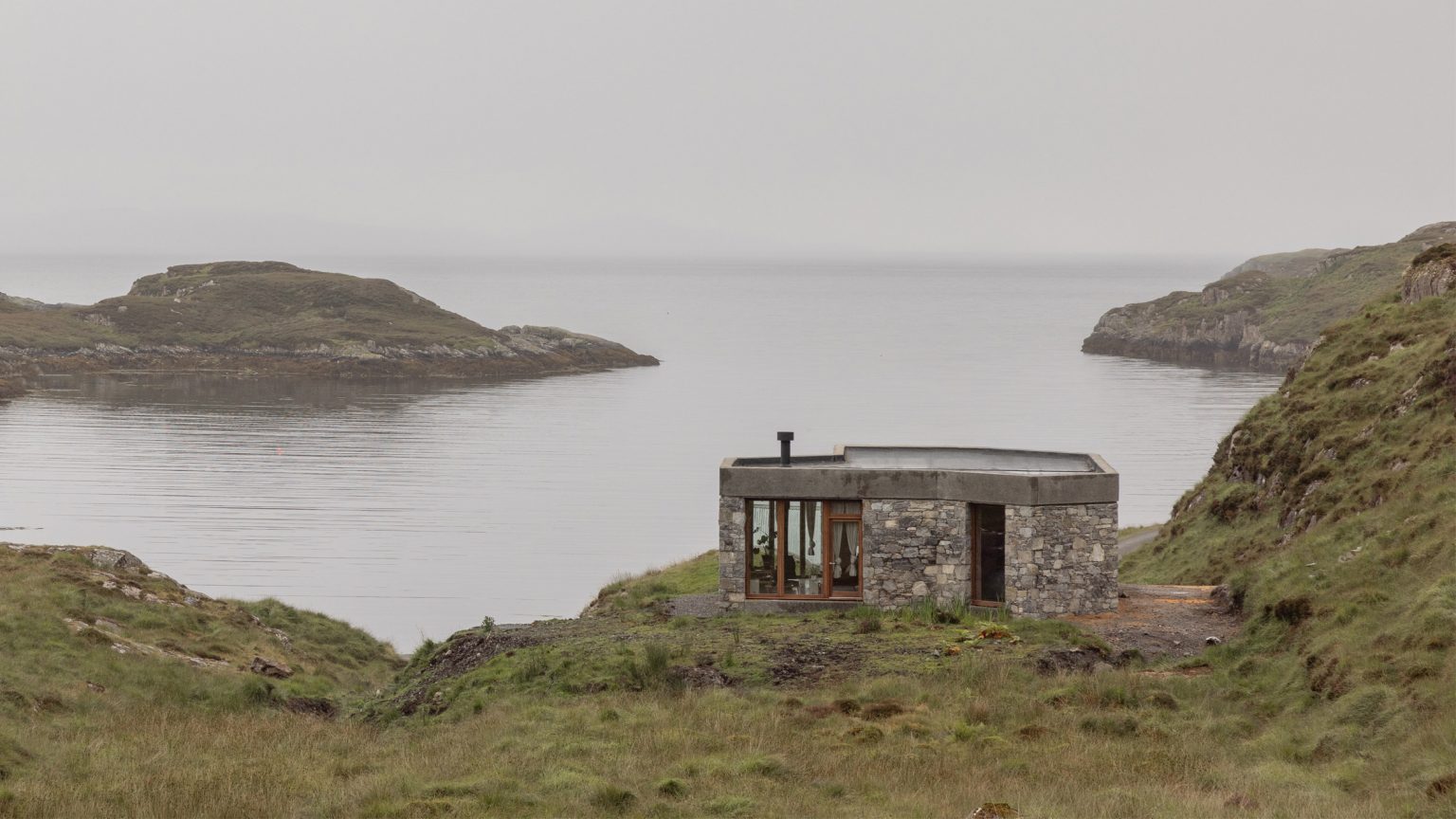
On December 10th, 2025, RIBA announced Caochan na Creige — a small house on the Isle of Harris — as House of the Year. The judges’ decision was unanimous. The reason? Stone that “addressed challenging climatic conditions” in one of Europe’s harshest environments.
This article breaks down what that award-winning project teaches us about stone veneer in Scotland, and how the same principles can be applied to real projects, real timelines, and real budgets.
What you’ll learn from this article
By the end of this article, you’ll understand:
- Why RIBA’s 2025 winner validates exterior stone veneer for the Scottish climate
- The reality of traditional stone masonry — and why it isn’t viable for most projects
- How modern exterior stone veneer achieves award-winning performance practically
- Which stone characteristics matter most for freeze–thaw, rain, and coastal exposure
- Real costs and timelines for exterior stone veneer in Scotland
- Where stone veneer works best, including garden walls and outdoor spaces
- How to approach stone selection with confidence rather than guesswork
Before we talk about the award, here’s the foundation
Before discussing the award-winning house itself, it’s important to understand a fundamental truth:
All natural stone works in Scottish exterior applications.
The real question isn’t which stones survive the Scottish climate. The question is:
- Which stone aesthetic do you prefer?
- How do you want your building to age visually over time?
Why all natural stone performs well in the Scottish climate
All natural stone shares a set of climate-resilient properties that make it suitable for exterior use in Scotland.
Geological density matters more than brand or product name
Natural stone forms over millions of years under immense heat and pressure. This process creates molecular density that prevents deep water penetration — the root cause of freeze–thaw damage.
Whether metamorphic, igneous, or sedimentary, properly sourced natural stone handles Scotland’s weather cycles indefinitely.
Low porosity prevents freeze–thaw failure
Quality natural stone used for exterior applications typically has porosity below 0.5%.
This means water does not penetrate deeply enough to cause structural damage when temperatures drop and freezing occurs. This is a material property, not a marketing claim.
Stone improves with age, rather than degrading
Unlike many modern exterior finishes, natural stone does not deteriorate over time. It ages.
The only difference between stones is how that aging appears visually — not whether the stone remains structurally sound.
What actually varies between different stones
If performance isn’t the differentiator, what is?
How stone shows visual aging
Different stones show weathering differently:
- Darker tones tend to hide water marks
- Lighter tones show patina more clearly
- Textured surfaces disguise weathering
- Smooth surfaces make aging more visible
None of this affects durability. It only affects what you see.
Colour evolution over time
Some stones develop moss or lichen in shaded areas. Others show mineral streaking from rainfall patterns. Some remain visually consistent for decades.
These are aesthetic developments, not defects.
Maintenance expectations are minimal
All natural stone requires essentially no maintenance.
Occasional rinsing is sufficient if coastal salt build-up bothers you aesthetically. There is no sealing, painting, or protective coating required.
The honest truth about choosing stone
The best way to choose stone is simple:
- Visit a showroom
- See stones wet and dry
- Touch different textures
- Consider how colours work with your building
- Ask how each stone ages visually
The stone you love aesthetically will work in the Scottish climate. Full stop.
The RIBA-winning project proves this principle. The architects chose Lewisian Gneiss because it belonged to the Harris landscape — and it handled Europe’s harshest climate because it was natural stone.
Why RIBA’s 2025 House of the Year matters for Scotland
Caochan na Creige sits on the Isle of Harris. Architects Eilidh Izat and Jack Arundell designed and hand-built their home using traditional full-thickness Lewisian Gneiss from a quarry five miles away.
The RIBA judges stated:
“The choice was unanimous. It addressed every issue — challenging climatic conditions, the relationship to vernacular architecture and a tight budget — with a rare mixture of sensitivity and boldness.”
Translated simply: in Scotland’s harshest environment, stone wasn’t decorative. It was essential.
What the house had to withstand
The building faced everything exterior materials in Scotland must survive:
- Nine named storms during construction
- Constant Hebridean wind exposure
- Driving coastal rain
- Repeated freeze–thaw cycles
- Salt spray from Atlantic waters
This validates what stone specialists have argued for decades: in the Scottish climate, natural stone is the right exterior material.
But there’s a critical distinction that’s often missed.
Why traditional stone masonry isn’t practical for most projects
The house was built using traditional full-thickness masonry — 6–10cm stone blocks, hand-placed by a master stonemason. It is craftsmanship at its finest.
It is also unrealistic for most projects.
The reality of traditional masonry timelines
The house took 18 months to build, through winter storms, in a remote island location.
That works for a self-build passion project. It does not work for:
- Renovations with fixed move-in dates
- Projects with financing deadlines
- Urban sites with access restrictions
Skilled labour availability is limited
Traditional stonemasons are rare, highly skilled, and expensive. Projects depend entirely on their availability, often booked months in advance.
Structural complexity multiplies cost
Full-thickness stone adds significant load, requiring:
- Foundation assessments
- Structural calculations
- Potential reinforcement
- Additional building warrant complexity
Budget reality
£167,000 for a one-bedroom house is remarkable — but scaling that approach to a typical Scottish family home quickly becomes prohibitive.
Why modern exterior stone veneer makes sense in Scotland
Modern exterior stone veneer in Scotland delivers the same material performance without the constraints of traditional masonry.
The material performance is identical
A 1.5cm stone veneer slice and a 10cm stone block share the same:
- Geological density
- Freeze–thaw resistance
- Weather durability
- Natural aging characteristics
The performance comes from the stone itself, not its thickness.
How long exterior stone veneer actually takes
For real-world Scottish projects:
- Semi-detached house facade: 2–3 weeks
- Feature wall or entrance facade: 3–5 days
No living on-site through winter. No seasonal dependency. No year-long disruption.
Why stone veneer works on existing buildings
Exterior stone veneer is ultra-lightweight — typically 1.5–3kg/m².
This makes it compatible with:
- Victorian and Edwardian properties
- 1930s and post-war housing
- Timber-frame new builds
- Commercial buildings with existing render
No structural upgrades are required in the vast majority of cases.
What Scottish climate really demands from exterior stone veneer
Freeze–thaw resistance
Natural stone’s density prevents water ingress deep enough to cause freeze expansion damage. Properly selected stone handles this indefinitely.
Driving rain performance
Stone sheds water naturally. When installed with ventilation gaps and correct detailing, any minimal moisture evaporates harmlessly.
Coastal wind and salt exposure
Stone is chemically inert. Wind polishes it. Salt washes off. There is no UV degradation, corrosion, or surface failure.
Temperature fluctuation tolerance
Stone has an exceptionally low thermal expansion rate. It moves microscopically with temperature changes, avoiding joint failure.
Choosing the right stone for your project
Texture affects appearance, not performance
- Textured finishes hide weathering
- Smooth finishes show patina more clearly
Both perform equally well.
Colour choice is about preference
- Darker tones hide marks
- Lighter tones show aging more visibly
- Mid-tones balance both
All work structurally in Scotland.
Where stone veneer works especially well in Scotland
Garden walls and outdoor structures
Stone veneer transforms boundary walls into permanent landscape features that improve with age.
Period properties
Stone veneer adds character while solving render and weathering issues.
Commercial buildings
Stone signals quality and permanence, improving street presence and tenant appeal.
New builds
Developers achieve traditional Scottish character without traditional masonry budgets.
Craftsmanship still matters
Exterior stone veneer installs faster, but quality depends on:
- Understanding Scottish building fabric
- Proper water management details
- Respect for material variation
- Correct adhesive and fixing systems
The principle remains the same as the RIBA winner: respect the material and the climate.
The lesson from RIBA 2025
In Scotland, stone is not a decorative luxury. It is an appropriate material choice.
You don’t need 18 months on a remote island to apply that lesson. You need:
- Natural stone chosen for climate resilience
- Professional installation
- Thoughtful architectural application
That’s how ordinary Scottish buildings become exceptional.
Blog Gallery

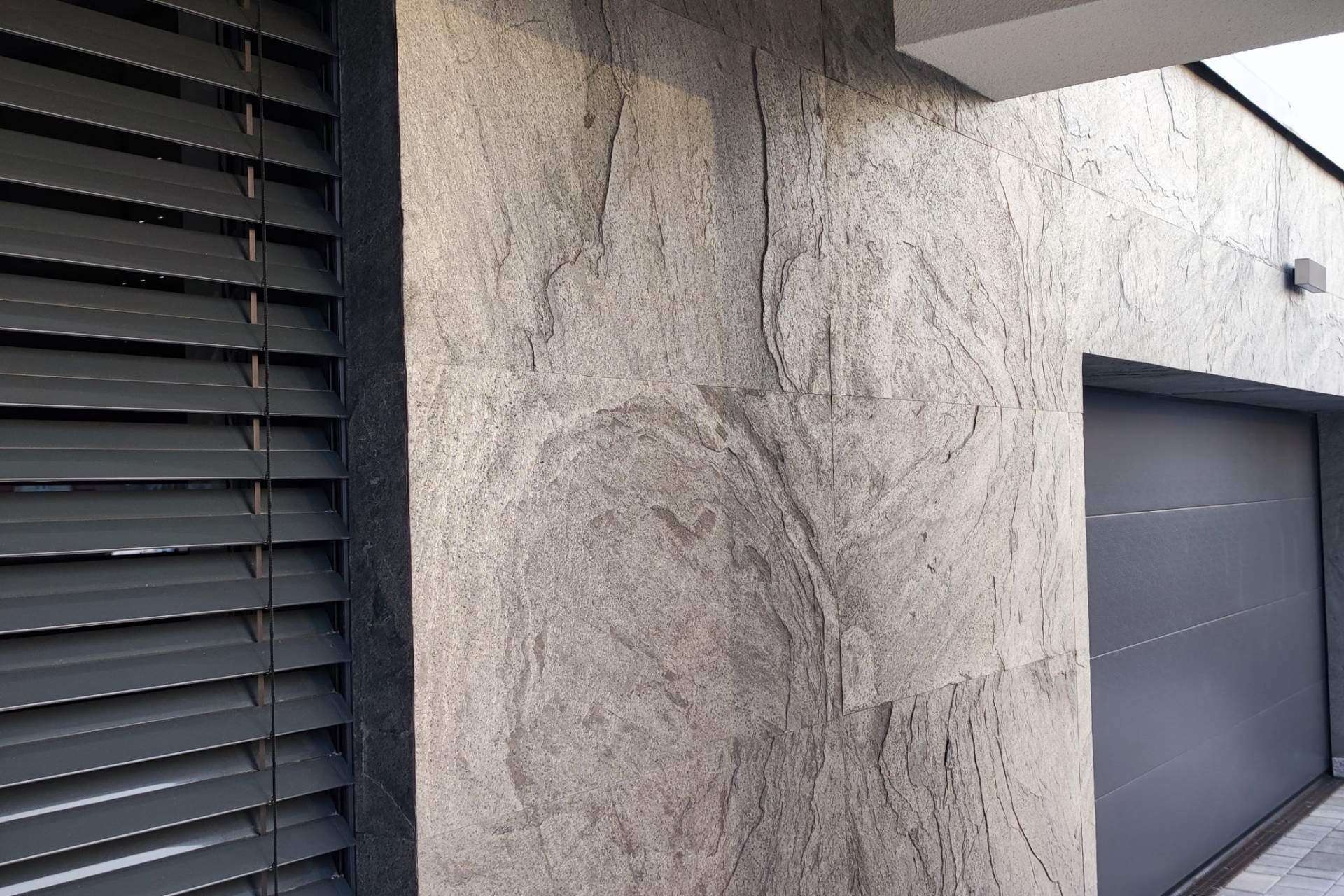
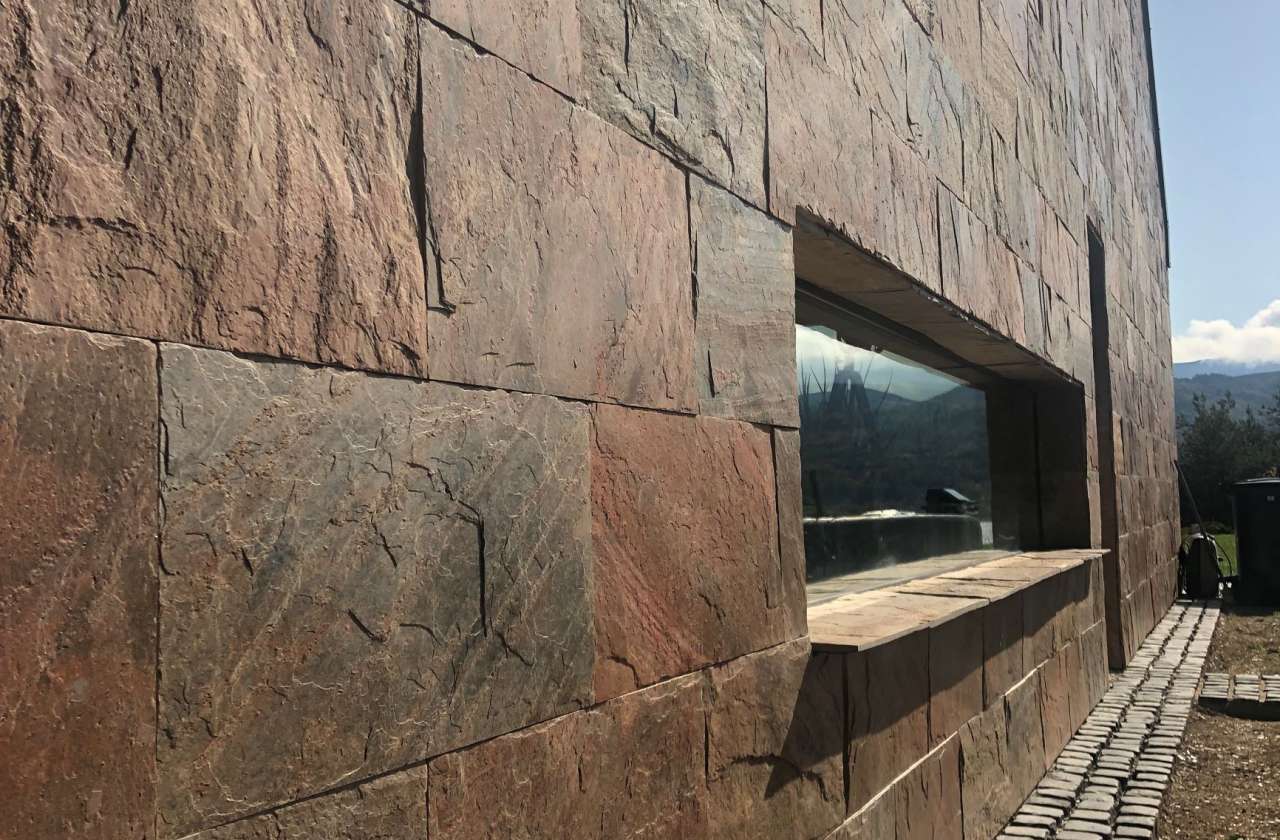
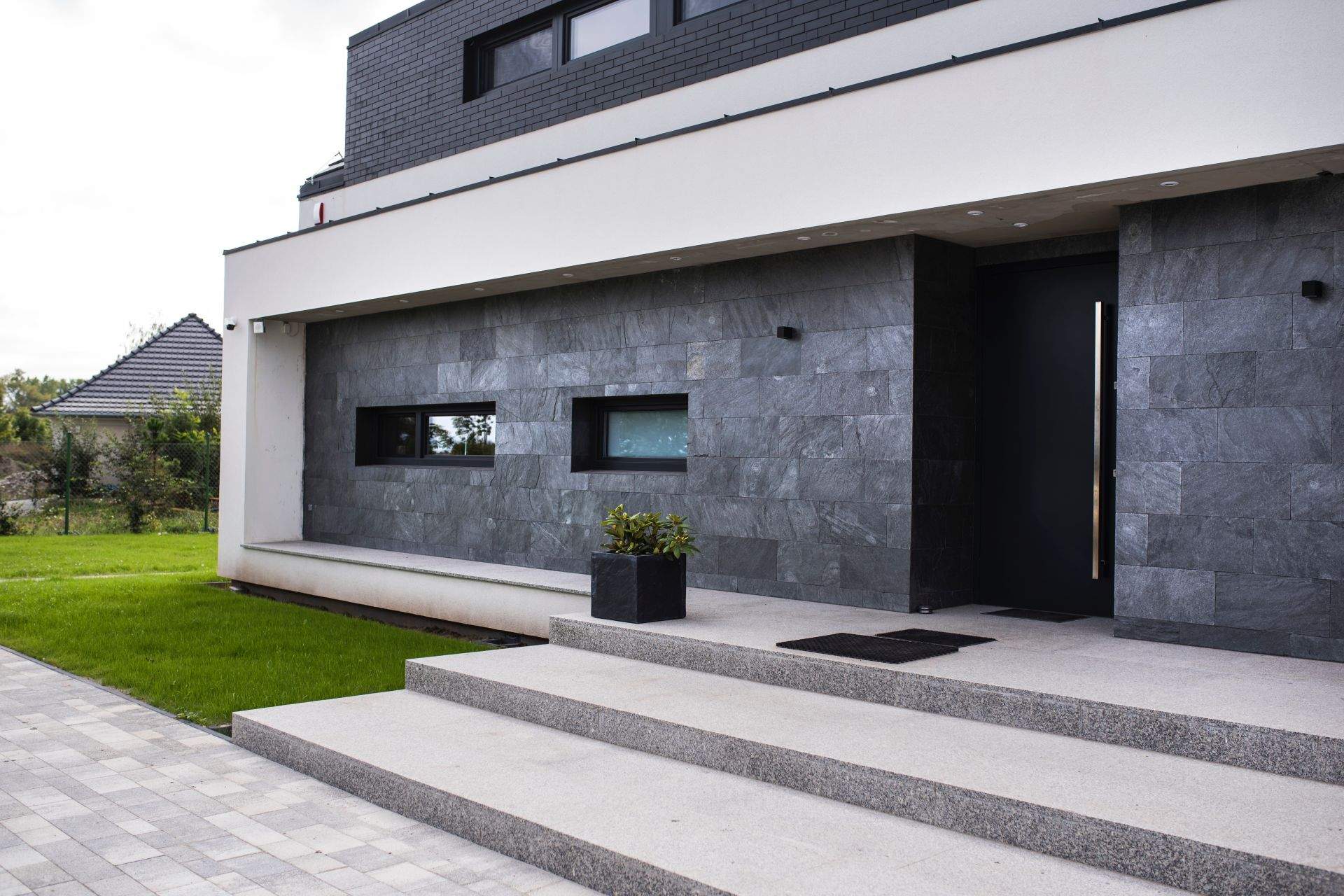
Blog posts
More articles to come soon...
Exterior Stone Veneer Scotland: What RIBA House of the Year 2025 Winner Teaches Us
Scotland's 2025 House of the Year proves that in harsh climate, stone wins. RIBA's award-winning Caochan na Creige on Isle of Harris survived 9 storms during construction. Here's what this project teaches about exterior stone veneer performance in Scottish conditions - and how modern stone veneer achieves the same climate resilience practically.


Why Scottish Interior Designers Are Obsessed With Stone Veneer (And What They Know That You Don't)
There's a reason you keep seeing natural stone veneer in every high-end Scottish home featured in design magazines, and it's not just because it looks expensive. Interior designers have understood something for years that most homeowners are only beginning to discover: stone veneer isn't about covering walls—it's about creating an emotional anchor point in a room.
Are you interested in a similar solution? Contact us via this form.
Send us a message
Or fill complete form

Open
Why sign up to our newsletter


