
We Love: Textured Stone Bathrooms
Stone veneer bathroom ideas that go beyond tile. Textured stone walls, wet room applications, and why natural surfaces are transforming bathrooms UK-wide.
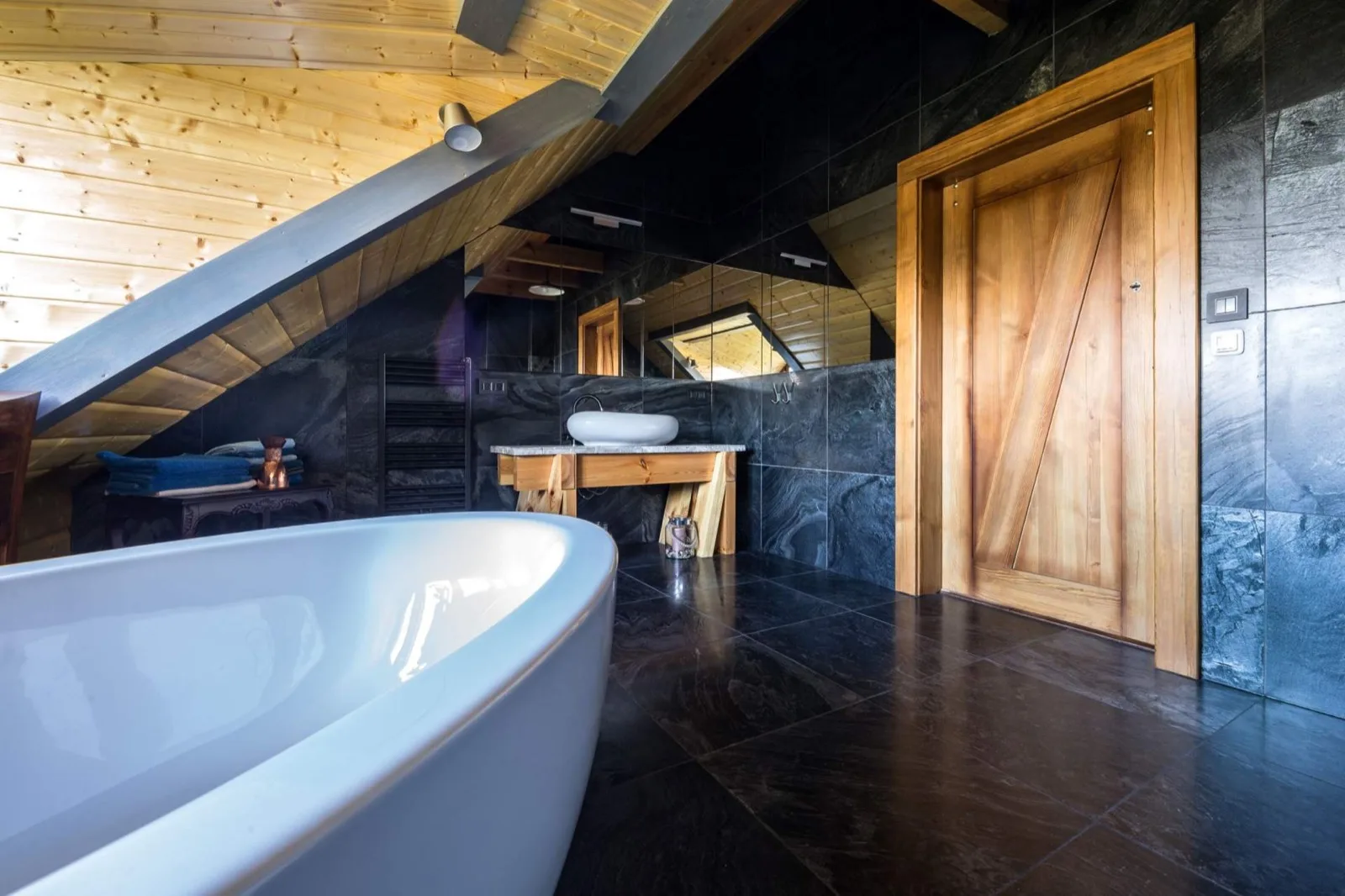
The Bathroom That Feels Different
You walk in and the air changes. It is not the lighting, though that helps. It is not the layout, though the proportions are generous. It is the walls. Rough-hewn stone, split-faced and unapologetic, catches the light at a hundred different angles. Shadows pool in the recesses. The surface invites your hand before your eye has finished looking.
This is what textured stone does to a bathroom. It turns a functional room into a space you actually want to be in.
Why Texture Changes Everything
The dominant direction in bathroom design is a decisive move away from flat, uniform surfaces toward layered, tactile materials. Fluted stone, ribbed surfaces, honed finishes, and three-dimensional wall treatments are replacing the smooth tiles and glossy ceramics that defined the last decade. Patterned and textured tiles are projected to see 66% growth, according to the National Kitchen & Bath Association (NKBA) 2026 Bath Trends Report data.
Stone veneer sits at the centre of this shift. Where flat tiles need grout lines and careful alignment to create visual interest, split-face and textured stone surfaces deliver depth and dimension as a natural consequence of the material itself. The texture is not applied — it is revealed.
There is science behind the appeal. Research into biophilic design — the evidence-based approach to connecting people with nature through architecture — shows that natural materials create measurable wellbeing benefits. A controlled study with 255 participants found that biophilic environments significantly reduce stress and boost mood, with people in natural-material settings showing greater recovery from stress than those in synthetic environments. Stone’s natural patterns, variations, and tactile qualities create the kind of visual complexity that biophilic research identifies as restorative for human cognition.
In a bathroom — a space increasingly designed as a personal sanctuary (77% of design professionals say homeowners now want hotel and resort-inspired aesthetics at home) — these benefits are not abstract. They are the difference between a room you use and a room you retreat to.
What We Love: Five Textured Stone Bathroom Ideas
The Full-Height Feature Wall
A single wall of textured stone, floor to ceiling, behind a freestanding bath or walk-in shower. The stone does the talking — everything else stays minimal. White sanitaryware, simple fixtures, perhaps warm timber shelving to one side. In a Victorian tenement bathroom in Edinburgh or a granite terrace in Aberdeen — where proportions can be compact — a full-height feature wall creates depth and draws the eye, making even a modest space feel considered and intentional.
Why it works: A darker stone feature wall creates perceived depth — colour psychology research confirms that a single accent wall adds visual dimension to a room without overwhelming it. The stone’s natural variation means it never looks monotonous, even across a large area.
The Wet Room Wrapped in Stone
Stone veneer across all wet-area surfaces — shower walls, seat niche, and the wall behind the basin. Masowa Stone’s products are rated as 100% waterproof with no grout lines, making them suitable for full wet room applications including steam rooms. Without grout to discolour or harbour mould, the stone surface stays cleaner longer than traditional tile installations.
Why it works: Continuity. When the same material wraps the space, the bathroom feels larger and more cohesive. There are no visual interruptions, no tile edges catching dirt, no grout lines breaking the surface.
The Contrast Pair: Rough Stone Meets Smooth Fixtures
Textured, split-face stone paired with sleek matte-black or brushed-brass fixtures. The juxtaposition is deliberate — the organic irregularity of stone against the precision of contemporary metalwork. Honed and matte fixture finishes are overtaking polished surfaces across the bathroom market, and they complement textured stone better than chrome ever did.
Why it works: Layered materials create warmth and visual interest. Industry guidance increasingly recommends combining stone with wood, metal, and natural fibres rather than relying on single-material schemes.
The Niche and Alcove Treatment
Rather than cladding an entire wall, stone is used to line recessed niches — the shower shelf, a bathing alcove, a built-in storage recess. The stone becomes a framed moment within the room, a material accent that rewards close attention without dominating the space.
Why it works: Restraint. Not every bathroom needs — or has space for — a full feature wall. A well-placed stone niche gives texture and warmth where the hand and eye naturally go, and it works with almost any surrounding finish.
The Warm Earthy Palette
Soft sandstone tones — honey, taupe, warm beige — replacing the cool greys that dominated bathroom design for the past decade. The current trend is firmly toward earthy, natural palettes: clay, mushroom, sage green, terracotta. Warm-toned stone creates a bathroom that feels grounding and calm rather than clinical.
Why it works: Colour psychology research confirms that warm earthy tones are associated with comfort, stability, and connection to nature. In a bathroom — where you start and end every day — those associations matter more than in any other room.
What to Think About for Your Project
Textured stone in a bathroom is not complicated, but it does require the right product for the application. For wet areas — showers, steam rooms, splashback zones — you need a stone veneer rated for moisture exposure, not just a decorative wall panel.
The weight advantage matters too. At a fraction of the weight of quarried stone, stone veneer can go onto standard plasterboard and timber-frame walls without structural reinforcement — opening up applications that traditional stone rules out. For builders fitting stone in client bathrooms, the substrate flexibility and speed of installation are genuine practical advantages.
And if the biophilic angle resonates — the idea that natural materials genuinely affect how a room makes you feel — we have explored the research in depth.
Related reading: Why Natural Stone Makes You Feel Good: The Science of Biophilic Design
Related reading: Stone Veneer vs Render: Which Is Right for Your Project?